20 Definitive Facts For Deciding On Floor Installation
Wiki Article
A Nail Is Put Down, Vs. Glue Down. Floating Hardwood Explained
Find three flooring contractors in Philadelphia on the way hardwood should be placed and you'll probably get three different responses -- not because any of them have a wrong answer, but because the proper installation technique is based on the unique circumstances of your home. The subfloor's type, degree of the floor, the species, your moisture needs and your long-term goals for the area all factor into the decision. A majority of homeowners only realize this later that's why it's important to be aware of the differences before you start getting estimates. This article will explain how each method performs and how each can be considered a good idea.
1. Nail-Down Is the Traditional Standard for Solid Hardwood
Nail-down installations, often referred to as staple-down mechanically attaching each plank of wood on a wood subfloor by using an pneumatic nailer. It's one of the oldest methods and is still the preferred technique for solid hardwood installation in Philadelphia homes with either plywood or OSB subfloors. The bond is strong, the floor is solid underfoot it's also not likely that will fail with time. Many flooring contractors prefer in nailing down for solid hardwood in above-grade wood subfloors, without hesitation.
2. Your subfloor decides whether nail-down Is a Possibility
A wood floor is required for nail-down hardwood -- full stop. Concrete slabs that can be found in basements and some ground-floor zones of Philadelphia homes and Delaware County ranches, cannot accept staples or nails any way. If the subfloor is made of concrete nail-down will not be on the plan, no matter what flooring material you'd like. A flooring professional who is licensed will recognize this on a tour of the site. However, an untrained one may not recognize it until after the work has begun.
3. Glue-Down Opens Up Concrete Slab Installations
Installing hardwood using glue-down uses an adhesive with a full spread applied to the subfloor before planks are pressed into place. It's the go-to method when it's necessary to have real hardwood installed over concrete. This includes basements that are in Montgomery County colonials, ground-floor slabs in modern South Jersey construction, or the space in which nail-down isn't practical. If it's done correctly and properly, a floor is extremely strong and has very little flex. The drawback is that removing it later can be a bit more complicated than removing a nailed flooring or floating one.
4. The floating Hardwood Doesn't connect to the Subfloor in any way
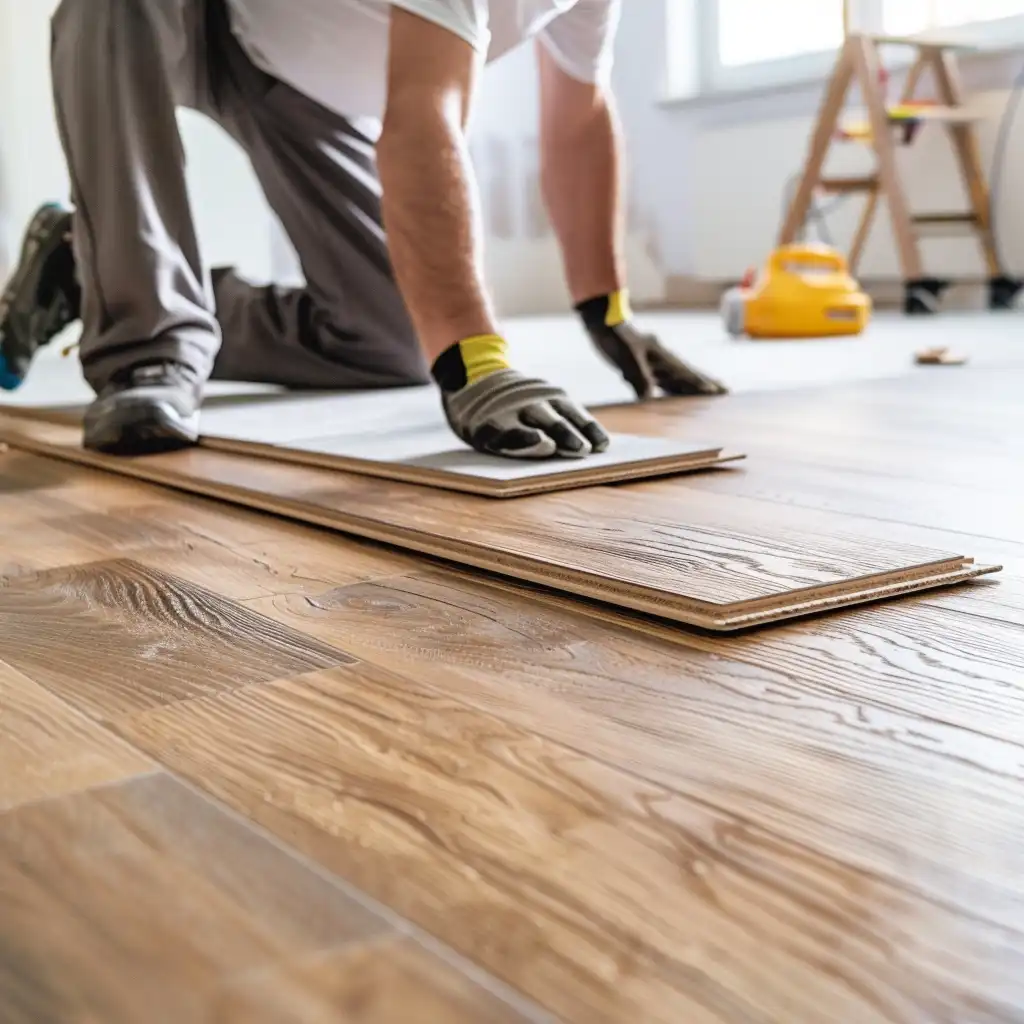
Floating installation is when the planks join at the edges and sit on the floor as an unconnected surface, and move as a whole instead of being fixed. It's less time-consuming to install, easier to remove, and better able to withstand subfloor imperfections than nail-down. Engineered hardwood is the most popular type of floating flooring in Philadelphia because its layered construction can accommodate the slight movement that comes with a floating, better than solid wood.
5. Floating floors have a distinct feeling underfoot
This is something that the showroom visits aren't always able to convey. Floating hardwood provides a gentle touch when you walk on it -- not dramatic but noticeable when you compare it to the nail-down flooring which is tied right to the subfloor. For the majority of homeowners, it's a easy choice. For some, particularly those upgrading from old nail-down floors, it may require adjustments. If you're worried are unsure, ask your flooring installation whether you could walk an open floor before making the decision to buy.
6. Nail-Down is the most labor intensive The Three Costs of Nail-Down
From an installation standpoint nail-down hardwood needs the longest time and requires the most skill and is evident in the labor quotes you'll get from Philadelphia flooring contractors. The subfloor has to be neat as well as flat and thick. It is essential to acclimatize the planks. The nailer requires careful technique to avoid splitting. Flooring contractors who nail down effectively are earning a profit. If you come across a low hardwood installation cost make sure you ask which method they'll use to fasten it.
7. Glue-Down adds material cost but also saves some labor Variables
Adhesive isn't cheap and glue-down work requires the right adhesive that's appropriate for the hardwood and subfloor combination. Although, glue-down install over a concrete slab that has been properly prepared can move faster than nail-down to a subfloor that needs extensive repair. Flooring contractors in Bucks County and Delaware County frequently suggest glue-down installation for engineered timber in slabs-on-grade construction specifically, because it is a way to combine authentic natural wood look with practical installation advantages.
8. Moisture Testing must be done prior to Any Method is Decided
The process is often left out on budget jobs and creates problems in the course of a year. Concrete slabs emit vapors that are a source of moisture as well as excessive moisture. This can cause glue-down adhesive to break as floating floorings buckle. Subfloors made of wood in older Philadelphia rowhomes may be prone to elevated moisture from crawlspaces or poor ventilation. A good moisture reading prior to installation isn't required -it's how a skilled flooring contractor can determine which method is safe, as well as which preparation work must be done prior to.
9. Refinishing Compatibility varies based on Method
Solid wood that has been nail-down is able to be sanded as well as refinished several times over its life -it's among the best arguments for choosing it despite its higher installation cost. A glue-down engineered wooden floor can typically be refinished once or twice according to the thickness of the wear layer. Floating engineered wood may contain a few refinishing possibilities. If long-term floor maintenance is an option you should consider this into your choice of method prior to installation, not after.
10. The Correct Method Is A Site Choice, Not a Preference Option
Homeowners may attend discussions about flooring with an thought about the kind of installation they want. Proficient flooring installers in Philadelphia will help to redirect the discussion to what your specific home actually supports. The top flooring installers aren't offering a pre-determined methodthey're simply assessing the subfloor, your humidity levels and floor level in addition to your species of wood, and will recommend accordingly. This kind of site-specific assessment is what distinguishes a licensed professional from someone who just owns a nailer. See the top rated
best flooring contractors Philadelphia for website info including affordable flooring installation Philadelphia, hardwood floor installation cost Philadelphia, bathroom tile installation Philadelphia, flooring estimate Philadelphia, flooring estimate Philadelphia, best flooring contractors Philadelphia, laminate flooring installation Philadelphia, flooring installation Montgomery County PA, flooring installation near me Philadelphia, LVP floor installation cost Philadelphia and more.
Waterproof Flooring Options For Philadelphia Bathrooms
Bathrooms are where flooring choices are made with the least amount of room for error. Every other room in the Philadelphia home can withstand an item that's only water-resistant -- a bathroom cannot. Showers' water, steam around the bases of toilets or splash zones near sinks, and the general humidity creates in a bathroom will expose every weak point in flooring but it's still not waterproof. Philadelphia homes aren't immune to additional problems old subfloors that could already be carrying moisture bathrooms that weren't upgraded since the 1970s and in a number of rowhomes, bathrooms placed above living space where a flooring malfunction could create a ceiling problem downstairs. Here's what actually is effective, what's not, and what to ask prior to any bathroom floor going in.
1. Porcelain Tile is the Benchmark Everything else is compared to
There's a reason why porcelain tiles have been the predominant bathroom flooring for a long time It is impervious to water at the floor, able to withstand humidity and steam without breaking or deteriorating, and with proper installation and grout sealing, it will overtake other options in the presence of water. Tiles made of porcelain in Philadelphia bathrooms is the option that has the longest documented track record. Its disadvantages are quite realcold underfoot, tough on joints, grout maintenance required -- but no other material matches its waterproofing properties and durability when used in bathrooms.
2. Ceramic Tile Is a Legitimate Step Down, Not a Comparable Alternative
It is true that porcelain and clay are often considered interchangeable, however they're not the same product for bathroom use. In terms of their porousness, porcelain is much more durable than ceramic, which is important when a space has humidity is regular rather than frequent. For a powder space or guest bathroom that is not used frequently ceramic tiles are a good and more affordable option. In a bathroom used as a primary in the Philadelphia home that is subject to daily showering, the strength and moisture resistance of ceramic is well worth the extra cost to the square foot. The procedure for installing is similar as the performance of the product over time is not.
3. LVP is the Most Practical option for waterproofing tile
Luxury vinyl flooring has gained its place as a bathroom flooring option. The flooring is 100 percent waterproof -- the core doesn't soak up water, the surface doesn't degrade when exposed to humidity, and it's warmer and more comfortable underfoot than tiles. The caveat to installation for bathrooms is that the waterproofing of LVP applies to the floor planks alone, though not exclusively to the seams between them. A bathroom that has a significant water exposure, such as a walk-in tub without a barrier, or a freestanding tub -- water can work its way between planks and be able to reach the subfloor after a while. The correct installation techniques and seam sealing is important more than in any other area.
4. Laminate Flooring in Bathrooms is a Choice You'll Remorse
It's important to say this clearly, as laminate is still showing up inside bathroom flooring estimate estimates, mostly because of its lower price. Laminate has a wood-fiber core. Wood fiber and continuous bathroom moisture are incompatible. The edges expand, seams expand, and the layer splits, and devastation accelerates in bathrooms more quickly than any other room in the house. It is a cheap installation of flooring that will put laminate in a Philadelphia bathroom is not an affordable deal, it's an installation that's been delayed for some years. Any flooring installer who recommends laminate flooring for a bathroom should be asked the reason.
5. The Subfloor Under a Philadelphia Bathroom Does Not Need a Comprehensive Assessment
Older Philadelphia rowhomes and suburban colonials generally have subfloors for bathrooms that have an existing past water damage, like leak staining, soft spots caused by decades of exposure to water or even the original wood subfloors which have taken in more water than they are supposed to have over time. New flooring installed over a damaged subfloor isn't going to fix the underlying problem, it just covers it and allows it to wear down. The repair of subfloors in Philadelphia bathrooms before the new flooring is installed isn't an add-on, it's required for the brand new flooring to work properly and not fall apart prematurely.
6. The Floor Heating Compatibility of a Material varies. Material
Radiant floor heating used in bathroom installations -- which is becoming frequent within Montgomery County and Delaware County home renovations -- aren't compatible with all flooring materials. Porcelain tile conducts and holds the heat efficiently, which makes it the ideal material for a heated subfloor system. LVP is compatible with radiant heat, however it has temperature limits that need to be met -- excess heat can cause dimensional instability. In the event that bathroom floor heating is part of your project, the flooring material decision and the heating system's specifications need to take place in concert between them, and not in isolation.
7. Bathroom Tile Layout Influences Both Style and Water Management
This is a point that separates experienced tile flooring installers from those who know only how to lay tile. Bathroom floors require a slight slope towards drain -- usually 1/4 inch per foot -to avoid standing water. Tile layout that doesn't account in this aspect, or that opposes it with large-format tiles that cross the slope, can cause issues with pooling, which eventually work their way into the subfloor. The design conversation with your contractor should consider how the tile pattern interacts to the drain's location, and not only what it looks like on paper.
8. Grout Selection in Bathrooms Is a Practical Decision
Standard sanded tile in bathrooms needs sealing at installation and periodic resealing throughout its life. Epoxy grout is harder cost, more expensive and less flexible to install- is essentially impervious to staining or moisture and doesn't require sealing. This grout is suitable for Philadelphia shower tile, in which homeowners want minimal maintenance Epoxy grout is more than worth the additional labor cost. For those who are committed to regular maintenance of their grout, standard grout with proper sealing will perform effectively. What isn't working is regular grout that never gets covered in a high-moisture bath environment.
9. Small Format Tile Manages Bathroom Floor Slopes Better
The trend of using large-format tiles -- 24x24 inches and bigger that work well in living and kitchen areas encounters practical difficulties in bathrooms. Larger tiles can be difficult to push towards drains with no visible unevenness. Also, they require exceptionally flat subfloors to avoid lippage. Smaller format tiles (such as 12x12 or below or mosaic tiles conform to the contours of the bathroom flooring more naturally, handle drainage slopes more effectively as well as provide more grout lines that increase the resistance to slip when wet. Philadelphia tile flooring professionals with years of experience in bathrooms will bring this up before they make their layout choices.
10. Bathroom Flooring and Wall Tiles should be specified together
A mistake that will cause feelings of regret that are more aesthetic than functional problems -- but it's worth it to be avoided in both cases. Wall tile and bathroom floor tile interact visually in tight space in ways, which are difficult to visualize using only samples. Scale, pattern directions, grout color and finish each need to be taken into account together. Flooring contractors who also take care of the installation of bathroom tiles Philadelphia work can coordinate this. The ones who just handle the floor and hand over wall tile to an independent contractor will create situations wherein the completed room appears to be two people acted independently -- because they did. Check out the recommended See the top rated LVP flooring installation Philadelphia for blog advice including tile flooring contractors Philadelphia PA, affordable flooring installation Philadelphia, flooring installation near me Philadelphia, ceramic tile flooring Philadelphia, free flooring estimate Philadelphia, LVP floor installation cost Philadelphia, solid hardwood floor installation Philadelphia, hardwood floor installation cost Philadelphia, hardwood flooring Montgomery County, licensed flooring installers Philadelphia and more.
